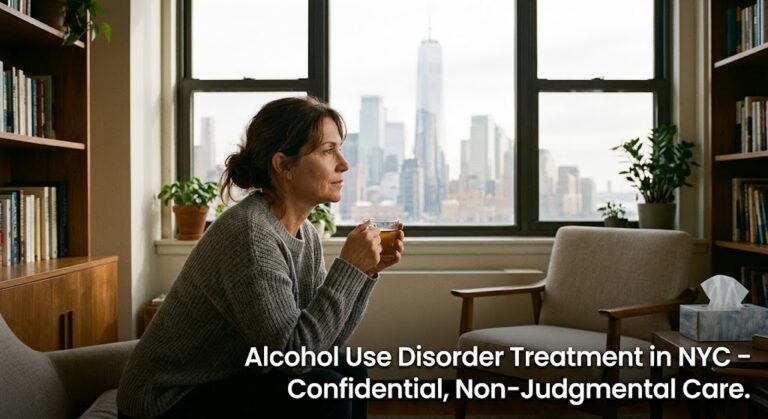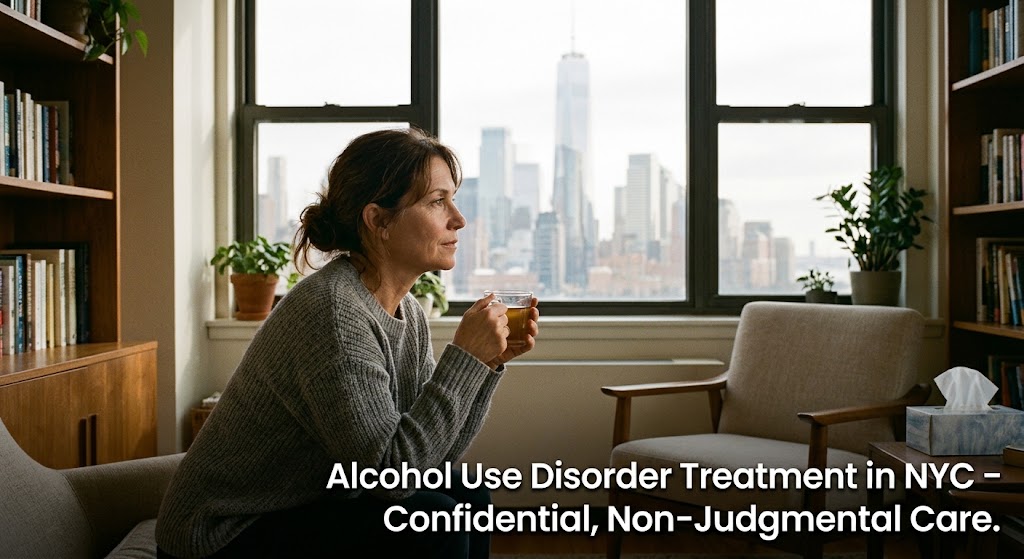
Alcohol Use Disorder Treatment in NYC’s Financial District: When “Just Cutting Back” Isn’t Working
You told yourself you’d stop at two. You didn’t. You’ve taken weeks off before—then slid back into the same pattern. Maybe you’re drinking to quiet anxiety, to sleep, to take the edge off a job that never switches off. Maybe you’re not drinking every day, but when you do, you can’t control how much. And you’re starting to wonder if this is something you can fix on your own.
It’s not a moral failure, and it’s not a matter of willpower. Alcohol use disorder is a medical condition—and in a city where drinking is woven into nearly every professional and social ritual, it’s far more common than most New Yorkers realize. At Empowered Psychiatry and Wellness in the Financial District, Lola, our double board-certified NP, provides alcohol use disorder treatment in NYC that addresses both the drinking and the mental health condition underneath it.
Why Treating the Drinking Alone Usually Fails
Most people who struggle with alcohol are also dealing with something else: anxiety, depression, trauma, ADHD, insomnia, or chronic stress. Alcohol provides short-term relief from those symptoms—then makes them worse over time. If the underlying condition isn’t treated, the drinking tends to return, no matter how many times you white-knuckle through a dry month.
This is what clinicians call dual diagnosis, and treating it properly means addressing both sides at once.
How Lola Approaches Alcohol Use Disorder
1. A Non-Judgmental Evaluation
Your 60-minute assessment covers your drinking patterns honestly and without shame—how much, how often, what triggers it, what you’ve tried, and what’s happening in your life. Lola isn’t there to lecture you. She’s there to understand the full picture.
2. Assessment for Co-Occurring Conditions
Anxiety, depression, trauma, sleep disorders, and attention issues are all common drivers of problem drinking. Identifying and treating these is often what finally makes reduction or abstinence sustainable.
3. Medication Support When Appropriate
Several medications can reduce cravings and support reduction or abstinence—including naltrexone, acamprosate, and others. Lola discusses whether medication-assisted treatment fits your situation and monitors carefully if it does.
4. Safe Withdrawal Planning
If you’ve been drinking heavily and regularly, stopping abruptly can be medically dangerous. Lola assesses your risk and helps you plan a safe approach—coordinating higher levels of care when needed.
5. Integrated Therapy and Coping Strategies
Follow-ups include relapse prevention skills, trigger identification, stress management, and—critically—alternative ways to manage the anxiety or emptiness that alcohol was filling.
6. Coordination With Your Broader Care
If you’re working with a therapist, attending meetings, or in an outpatient program, Lola coordinates with your team so you’re not managing two disconnected treatment plans.
Discreet, Professional Care in Lower Manhattan
Many of our patients are professionals who need confidentiality and scheduling that fits a demanding career. We offer in-person visits at 42 Broadway—steps from Wall Street and Bowling Green—and secure telehealth across New York State.
You Don’t Have to Hit Bottom
You don’t need to lose a job, a relationship, or your health before it’s legitimate to ask for help. If you’ve been searching for alcohol counseling near you in NYC and hesitating because “it’s not that bad,” that hesitation is worth examining. Early intervention is easier than recovery from a crisis.
Schedule a Confidential Evaluation →
Learn more about our whole-person approach on our Financial District psychiatric care page.